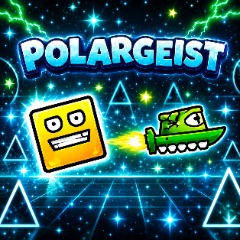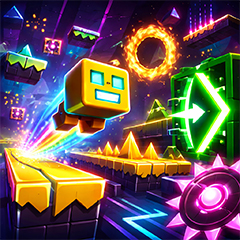
Geometry Dash Nemesis delivers fast-paced action with shooting mechanics, upgrades, and neon visuals that reinvent classic gameplay. Win every neon run.
The main object you'll control throughout the game is a cube that automatically moves forward. Unlike other Geometry Dash games, this object can't jump; instead, it holds a gun. Use this gun to shoot down obstacles along the way. High concentration and quick reflexes are key to overcoming obstacles and reaching the finish line safely.
Geometry Dash Nemesis stands out thanks to its diverse gameplay sections and unique mechanics that constantly change how you interact with the level.
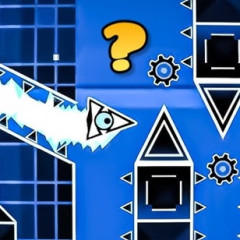
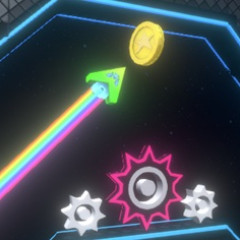
In Nemesis, you control a cube equipped with a gun. By clicking or holding your mouse, you can shoot and destroy obstacles such as spikes, moving blocks, and enemy robots. Every destroyed object rewards you with coins, which can be used to upgrade your weapon’s firing speed or purchase additional guns for greater firepower. This progression system adds a layer of strategy rarely seen in traditional Geometry Dash Lite levels.
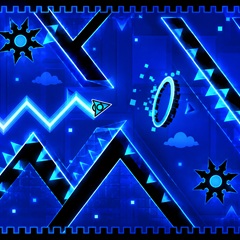
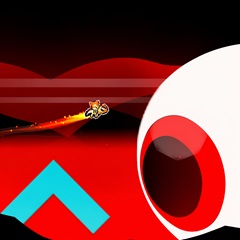
The level includes multiple gameplay modes, such as cube, robot, UFO, ball, wave, and auto sections. Tight corridors, gravity portals, and fast transitions demand constant focus. One memorable segment even feels like a Geometry Portal Challenge, where rapid portal changes test your adaptability and reaction speed without overwhelming the player.
Visually, Geometry Dash Nemesis is impressive and carefully crafted. The level uses a clean lilac and white color scheme, giving it a futuristic and polished appearance. With over 30,000 objects, the environment feels dense and alive, filled with animated details and smooth transitions.
Due to its high object count, you using low-end devices are advised to enable Low Detail Mode (LDM). This option reduces visual complexity while preserving the core gameplay, ensuring a smooth and enjoyable experience across a wide range of systems.